Showing posts with label book. Show all posts

book: The Undercover Economist


Has (economic)ideas that are useful for everyone to be aware of, as for example an explanation of the pricing of coffee shops, but same ideas apply to all goods. Maybe a bit more "traditional economics" oriented than the Freakonomics book, but in similar fashion.

book: Career 2.0


Good career advice.

My Takeaways:
  • Ultimately the responsibility for your career and your life rests with one and only one person. You.
  • Be passioned about your work.
  • Keep on learning, keep on building your intellectual portfolio.
  • Select your goals and remind them frequently.
  • Breakdown your goals into weekly and even daily actions.
  • Sharing knowledge, by writing and speaking publicly, deepens your grasp of the knowledge.
This book is also good reference of public speaking techniques.

Thanks Erki, for the suggestion.

book: ReSampling - The New Statistics

This book describes a revolutionary —but now fully accepted— approach to probability and statistics. Monte Carlo resampling simulation takes the mumbo-jumbo out of statistics and enables even beginning students to understand completely everything that is done.
— from books intro

Its statistics made easy, because there's no need to tinker around with theory much, its all about harnessing computer power to do the simulations of the probabilities you'r after. Which i think is just great. You can find the book here.

On the process, the authors(Julian Simon and Peter Bruce) developed also a computer language for performing these simulations described and used in the book.
This has been implemented in a Java application, by John Grosberg, and made available as Statistics101, so you can easily play around and test the code examples from the book.

book: FREE


Chris Anderson, editor in chief of Wired and author of The Long Tail, has published a new book that looks at something of interest to Consumerist: the trend of content and services to slide toward free, especially in the digital world. It's pretty light reading and an interesting look at economics in the digital marketplace in particular, and for now, at least, it's available in multiple formats for free.
— from consumerist

It discusses Free, its meaning, its implications, its misconceptions, its business models, etc, Free is no doubt the trend of the future that has breen brought full-on with the digital age and is having a huge impact in most industries including radically changing money making models.

In its launch is being offered for free, I listened to the Free's free audio version from wired.

book: Super Crunchers


Nice book, giving a lot of reasons on why data crunching is so important.
Enjoyed also the story about the 2 SD(Standard Deviation) Rule, used for point estimation.

book: Getting Real - Alone Time

People need uninterrupted time to get things done

37signals is spread out over four cities and eight time zones. From Provo, Utah to Copenhagen, Denmark, the five of us are eight hours apart. One positive side effect of this eight hour difference is alone time.

There are only about 4-5 hours during the day that we're all up and working together. At other times, the us team is sleeping while David, who's in Denmark, is working. The rest of the time, we're working while David is sleeping. This gives us about half of the day together and the other half alone.

Guess which part of the day we get the most work done? The alone part. It's not that surprising really. Many people prefer to work either early in the morning or late at night — times when they're not being bothered.

When you have a long stretch when you aren't bothered, you can get in the zone. The zone is when you are most productive. It's when you don't have to mindshift between various tasks. It's when you aren't interrupted to answer a question or look up something or send an email or answer an im. The alone zone is where real progress is made.
from: 37 signals - getting real

book: Getting Real

From 37signals:


Getting real is less. Less mass, less software, less features, less paperwork, less of everything that's not essential (and most of what you think is essential actually isn't).

Getting Real is staying small and being agile.

Getting Real is about iterations and lowering the cost of change.

Getting Real is all about launching, tweaking, and constantly improving which makes it a perfect approach for web-based software.

Getting Real delivers just what customers need and eliminates anything they don't.


Great Stuff, do check it out, its here for free.

book: Collective Intelligence in Action


From editors site:
Collective Intelligence in Action is a hands-on guidebook for implementing collective-intelligence concepts using Java. It is the first Java-based book to emphasize the underlying algorithms and technical implementation of vital data gathering and mining techniques like analyzing trends, discovering relationships, and making predictions.This book is for Java developers implementing collective intelligence in real, high-use applications.

Overall i liked it and have learned loads, it does have more Java code in it that i'd wanted, but for the ones who intent to use Java language the code in the book is handy, well, its after all a Java book, right? There's also some very useful, class diagrams that will help you to use the code described from JRuby, Clojure, Scala...

Its goes through all the process of: explaining the data structures needed to represent data in your app, how to collect data from web(blogs, etc), theory & implementation of mining algorithms, leveraging open source tools like Weka and Lucene, up to how Amazon, Google News and Netflix do their data mining(to some extent).
Liked also the data mining(machine learning) summaries on different data mining techniques, very compact and nicely done.

book: The 4-Hour Workweek


A favorite of mine.

Some discussed topics and quotes:
  • 80/20 Pareto's rule.
  • Parkinson's Law.
  • The need for an "Information Diet" and the excess of information.
  • Spending a lot of time on something unimportant does not make it important.
  • Lack of time is actually lack of priorities.
  • Automations to free you from work.
  • Virtual Assistants to free you from work.
  • People don’t want to be millionaires. They want to experience what they believe only millions can buy.
  • Less is not laziness. Focus on being productive instead of busy.
  • Slow down and remember this: Most things make no difference.
Thanks José Santos, for the suggestion.

book: The Speed Reading Course

by: Peter Shepherd & Gregory Unsworth-Michell
Very short. It teaches techniques:
  • to increase reading speed,
  • to more quickly grasp and digest information(key work highlight, MindMaps, visualization of information, pre-read survey, etc etc..),
  • to improve memory recall.

Useful tips in today's information overload.

book: The Power of less


How to do less while accomplishing more, learn how to limit yourself to what's important. Full of very practical advices.
"With the countless distractions that come from every corner of modern life, it’s amazing that we’re ever able to accomplish anything. The Power of Less demonstrates how to streamline your life by identifying the essential and eliminating the unnecessary — freeing you from everyday clutter and allowing you to focus on accomplishing the goals that can change your life for the better."
Thanks José Santos, for the suggestion.

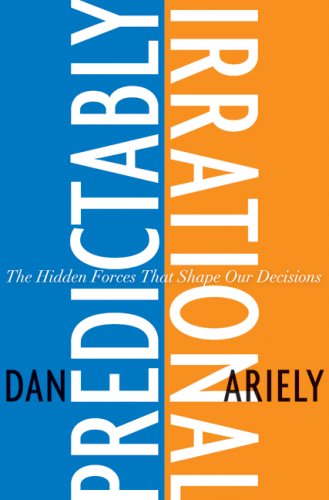
book: Predictably Irrational


"Do you know why we sometimes find ourselves excitedly buying things we don’t really need?"

"Do you know why we still have a headache after taking a five-cent aspirin, but why that same headache vanishes when the aspirin costs 50 cents?"

"Do you know why people who have been asked to recall the Ten Commandments tend to be more honest (at least immediately afterward) than those who haven’t? Or why honor codes actually do reduce dishonesty in the workplace?"

"..We are pawns in a game whose forces we fail to understand..."
Is not in any way related to conspiracy theories and the like, is about simple every day things, the book clearly shows(by experiments) that everybody makes predictable mistakes, again and again, we just don't notice it most of the times, thus being aware of them is a first step on how to avoid them.

book: Outliers


This book is an Outlier itself by being a great book.

Outliers explained, by Malcolm Gladwell

book: Freakonomics


A book I just happened to run into last weekend at the bookstore, and what a great book it is!

Its all about answering questions like:

Which is more dangerous, a gun or a swimming pool? What do schoolteachers and sumo wrestlers have in common? Why do drug dealers still live with their moms? How much do parents really matter? How did the legalization of abortion affect the rate of violent crime?

The results of his finding are quite interesting, more about society than the regular boring economic stuff like stocks, inflation, etc... is quite entertaining.

And it does it in the right way, for example: at one point he says that schoolteachers cheat on national exams, but instead of just stating it, he actually proves it in a very data mining style, he goes into analyzing data of the exam results and looks up patterns of data that are clearly not normal and expected.

worth checking out.

official site: http://www.freakonomicsbook.com/